jalfred10's pick · Updated August 2026
12
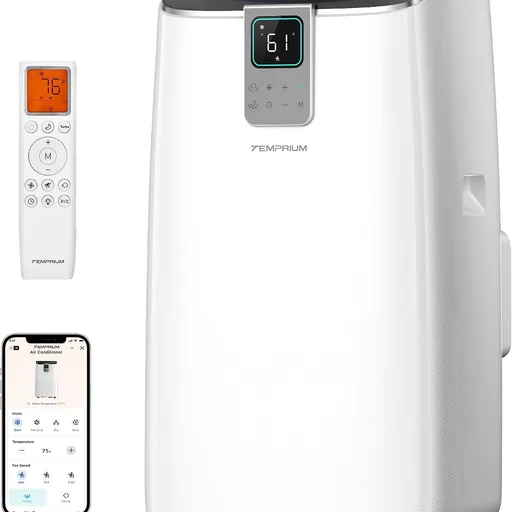
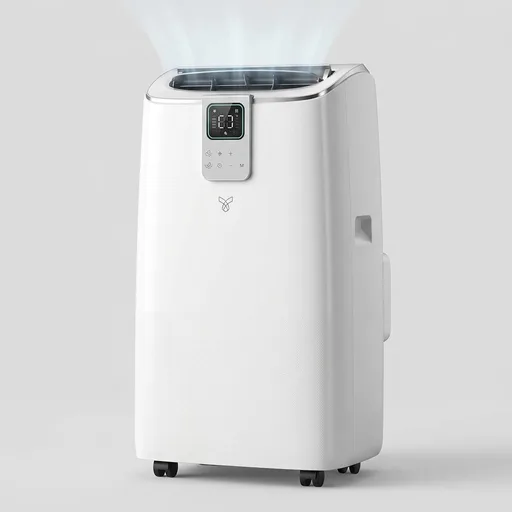
A 12,000 BTU portable AC may suit someone who wants to cool one main room without committing to a permanent installation. That makes it relevant for renters, apartment setups, spare rooms, and any space where a window unit or central system is not the right fit. The smart control angle also matters if the room changes through the day and you want a little more flexibility than a basic on or off machine.
The main reason to consider a unit like this is the balance between capacity and convenience. The stated 12,000 BTU rating suggests a unit aimed at moderate room sizes, and the up to 600 square foot claim gives a rough starting point for comparison. The useful part is not the number by itself. It is whether the room you need to cool has the right conditions for a portable unit to work well, including ceiling height, sun exposure, insulation, and how much heat the room already holds. That is the part worth checking before buying.
Cool, dry, and fan modes are a practical set of options because not every day calls for the same kind of support. In humid weather, a dry mode can matter as much as raw cooling. On milder days, fan mode may be enough to move air without running the compressor hard. The smart control feature may also help if you want to adjust settings from across the room or set a schedule, but the details to verify are the app setup, Wi-Fi requirements, and whether the controls are still easy to use without the app if you prefer not to rely on it.
Portable air conditioners do come with tradeoffs, and this is the point to look closely at the specs rather than assume too much. The exhaust hose still needs a proper window setup, and the unit will need a place to sit that leaves room for airflow and drainage. Noise level is another thing to confirm, since portable units vary a lot there and the advertised output does not tell you how loud it will feel in a bedroom or office. If the product includes a dehumidifying function or drain requirements, that is worth checking too, because those details affect day-to-day use more than the mode names on the box.
The evidence here is limited to the listing facts, so the right way to read this is as a fit guide, not a performance claim. A portable AC with this capacity may be a sensible choice if you need flexible cooling for a space that changes in temperature and you want more than a basic fan. It is less likely to be the right pick if you need whole-home cooling or want a fully silent setup. For a buyer comparing portable options, the key questions are room size, venting, noise, drainage, and whether the smart controls add real value or just another app to manage. If those boxes line up, this kind of unit can be a practical middle ground.
Amazon product links on this guide are not currently affiliate links. Neither jalfred10 nor Buyer Field Guide earns an affiliate commission from them.
See current price