jalfred10's pick · Updated August 2026
Amazon Basics Air Circulator Fan
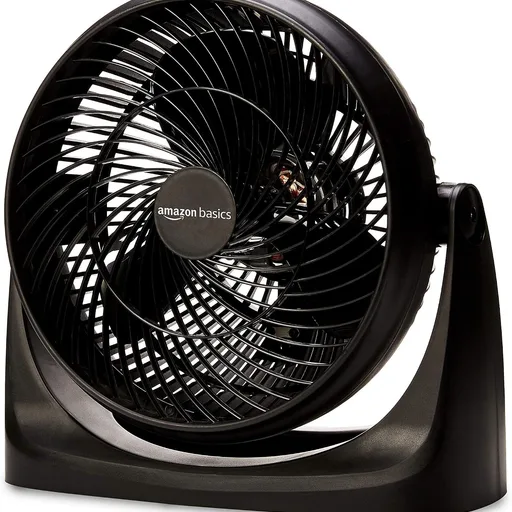
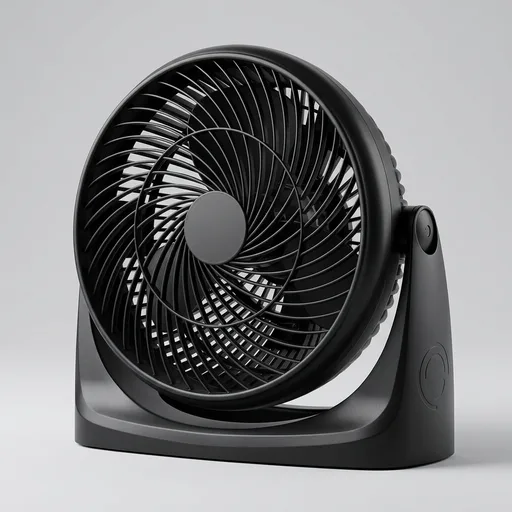
A desk-size air circulator like this may suit someone who wants simple airflow in a bedroom, home office, or small shared room without giving up much floor or table space. The compact footprint and lightweight build make it easier to place on a dresser, shelf, or desk than a taller fan, and the 90-degree tilt head gives more flexibility if the goal is to aim air at a bed, a chair, or a work area rather than just push it straight ahead. For a small space, that kind of direct airflow can be the deciding factor.
The three speed settings are the basic feature set most shoppers will care about here. That usually means the fan is meant to cover the everyday range from a gentle background breeze to stronger circulation when a room feels still. The 70-watt rating suggests a fan with enough power to move air more actively than a tiny USB model, while still staying in a category that is meant for personal or room-level circulation rather than whole-home cooling. For people comparing desk fans, the key question is not just raw power, but how much control the fan gives over direction, speed, and placement.
Who this is for: someone who wants a simple fan for a nightstand, workbench, dorm desk, or small office corner. It may also fit someone who prefers a no-frills appliance with manual controls and does not need app features, timers, oscillation, or smart-home integration. If the main goal is to keep air moving near one person or one spot, a compact air circulator can be a practical choice. If the room is larger or the goal is broad coverage, a buyer may want to compare this with a pedestal fan or a larger oscillating model instead.
One thing to verify before buying is whether the size and airflow style match the room. A 14.8-inch-wide fan can still be easy to place, but desk fans vary a lot in how far they throw air and how much of the room they actually affect. It is also worth checking the noise level, since fans in this size range can sound very different from one another even when their listed power looks similar. If quiet use matters at night or during calls, that is the spec to look for closely.
The listing points to a straightforward design rather than a feature-heavy one, which can be a plus if you want something easy to set up and move around. The tilt head adds useful positioning without making the fan more complicated, and the lightweight build should make it easier to carry from one room to another. At the same time, buyers who want a remote, timer, or automated mode will need to look elsewhere. That is not a flaw so much as a sign of what this product is trying to be.
A fan like this is best thought of as a compact circulation tool. It may be a good fit for someone who wants a small, simple unit for a desk or bedside table and values adjustability over extra features. If the room is modest in size and the goal is targeted airflow, this looks like a sensible option to consider. If you need wide coverage or specialized controls, it is the kind of product worth comparing against a bigger fan before deciding.
Amazon product links on this guide are not currently affiliate links. Neither jalfred10 nor Buyer Field Guide earns an affiliate commission from them.
See current price